

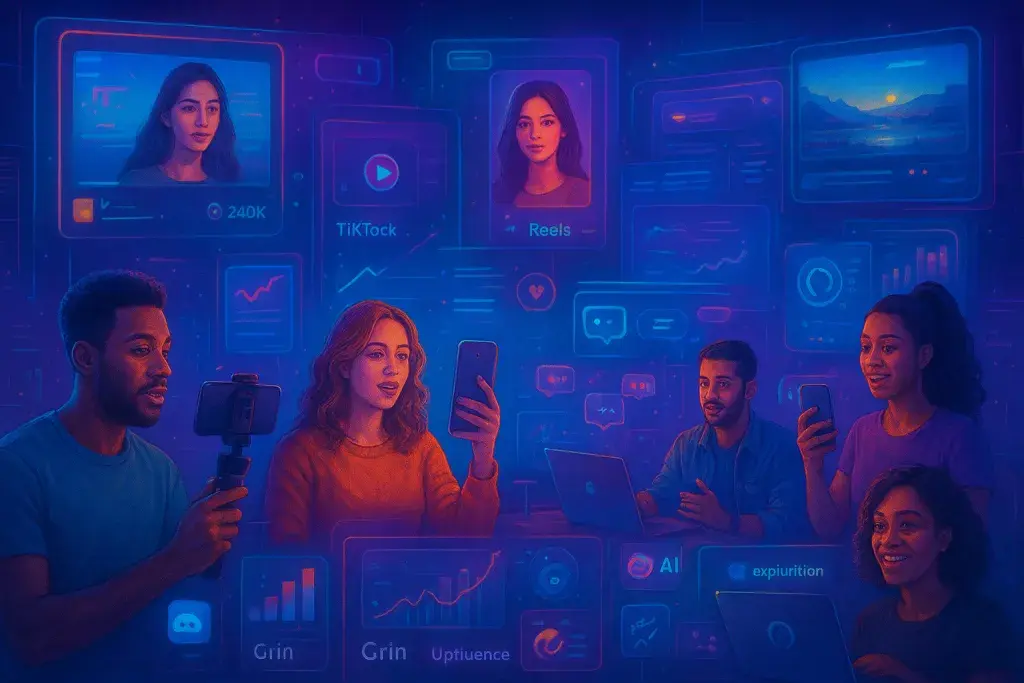
Advertisers spent more than $600 billion on digital advertising globally in 2023, yet a significant portion of that budget produced diminishing returns. The problem was not spending too little - it was deploying the wrong strategies in a landscape that had fundamentally changed. Audiences had fragmented across dozens of platforms. Attention spans had shortened. Trust in traditional brand messaging had eroded. And an entirely new class of media - creator-driven, algorithmically distributed video - had quietly become the most powerful advertising medium on the planet.
The brands winning right now are not necessarily the ones with the largest budgets. They are the ones that understood, earlier than their competitors, that online advertising trends were moving away from interruption and toward participation. Video content monetization, authentic social media audience engagement, and strategic use of influencer marketing platforms are no longer supplementary tactics - they are the core of what effective digital marketing strategies look like in this decade.
This article maps out exactly how these forces work, why they matter, and how to build a practical approach that turns understanding into execution. Whether you manage a brand's entire marketing function or run campaigns for a single product line, the framework here applies directly to decisions you are making right now.
The New Landscape of Online Advertising Trends
From Banner Ads to Algorithmic Precision: A Decade in Review
Online advertising began as a fairly blunt instrument. Banner ads in the late 1990s and early 2000s operated on simple visibility logic: the more people who saw the ad, the better. Click-through rates hovered around two percent at launch, then fell steadily as users developed what researchers called "banner blindness" - the unconscious habit of ignoring anything that looked like an advertisement.
The shift toward precision came gradually, then all at once. Programmatic advertising, which automates the buying and placement of ads through real-time bidding systems, replaced much of the manual negotiation that had defined media buying. Audience data made it possible to target not just demographics but behaviors, interests, and intent signals. By the early 2010s, a brand could show a specific ad to a 34-year-old cycling enthusiast who had visited a competitor's website within the past 48 hours. That specificity was genuinely transformative.
The next disruption arrived with the announced deprecation of third-party cookies. For years, cross-site tracking had been the backbone of retargeting and audience extension. When browser makers began blocking third-party cookies by default and regulatory pressure under frameworks like GDPR and CCPA tightened data collection practices, the industry was forced to rebuild its targeting infrastructure around consented, first-party data. That rebuilding effort is still underway, and it is reshaping how every serious advertiser thinks about audience relationships.
Why Traditional Advertising Channels Are Losing Ground
Linear television viewership among adults under 35 has been in structural decline for over a decade. Print advertising revenues have followed a similar trajectory. Neither trend is cyclical - both reflect a permanent shift in how people consume content and, by extension, how advertisers can realistically reach them.
Ad-blocking technology has accelerated the problem. Estimates suggest that several hundred million people globally use ad blockers on desktop browsers, and mobile ad-blocking adoption is rising in markets across Asia and Europe. The audiences that advertisers most want to reach - digitally native, high-spending, early adopters - are disproportionately likely to block traditional display formats entirely.
What fills the gap is content-driven advertising: formats where the commercial message is embedded within genuinely useful or entertaining material rather than inserted as an interruption. Sponsored video content, influencer integrations, branded newsletters, and native social placements all operate on this principle. They work not because they are less visible, but because they earn attention rather than demanding it.
Key Forces Shaping the Future of Digital Advertising
Several converging forces are defining where digital marketing strategies are headed over the next three to five years. Understanding them is not an academic exercise - each one has direct implications for how budgets should be allocated and how campaigns should be structured.
- AI-driven campaign optimization: Machine learning systems now manage bid adjustments, audience segmentation, and creative rotation in real time, often outperforming manual campaign management within weeks of sufficient data accumulation.
- First-party data as competitive infrastructure: Brands that have built owned data assets - email lists, loyalty programs, app user bases - have a structural advantage over those still dependent on rented audience data from platforms.
- Creator economy scale: The number of people earning income from content creation has grown into the tens of millions globally, creating an entirely new media distribution layer that brands can access through influencer marketing platforms.
- Privacy-first identity solutions: Contextual targeting, cohort-based models, and on-device processing are emerging as viable alternatives to individual-level tracking.
- Connected TV growth: Streaming platforms with ad-supported tiers are capturing viewing time that previously lived in linear broadcast, opening premium video inventory to programmatic buyers.
Video Content Monetization: Turning Views Into Revenue
YouTube Monetization Models for Brands and Creators
YouTube remains the most sophisticated video content monetization ecosystem available to both creators and advertisers. The platform's Partner Program allows creators who meet eligibility thresholds to earn a share of the advertising revenue generated by ads shown against their content. But ad revenue sharing is only one layer of a much more complex monetization structure.
Channel memberships, Super Thanks, and merchandise shelves give creators direct monetization channels tied to audience loyalty rather than advertiser demand. For brands, this ecosystem creates multiple entry points: pre-roll and mid-roll ads bought programmatically, but also direct sponsorship integrations that appear within the content itself and typically command higher CPMs because they cannot be skipped.
For creators looking to scale their channels efficiently, understanding the platform's infrastructure matters as much as content quality. Tools and resources available through platforms like accs market youtube can offer strategic advantages when building a channel's presence in a highly competitive environment - particularly for creators trying to establish initial traction before organic discovery kicks in. Algorithm optimization - specifically watch time, click-through rate from thumbnails, and audience retention curves - determines how broadly YouTube distributes content. Creators who understand these mechanics can significantly accelerate revenue growth without proportional increases in production cost.
Short-Form Video Monetization on TikTok and Instagram
Short-form video monetization has matured considerably since TikTok launched its original Creator Fund, which paid rates so low that many creators publicly criticized it as unsustainable. TikTok's subsequent Pulse program, which places brand ads adjacent to top-performing content, represents a more serious attempt to create revenue-sharing that rewards high-quality creators.
Instagram's approach has shifted repeatedly. Reels bonuses, affiliate tools, and branded content tags give creators multiple ways to generate income, but the platform has prioritized advertiser tools over creator monetization infrastructure compared to YouTube's more established ecosystem. For brands, the opportunity lies less in direct monetization and more in using these short-form environments for cost-efficient awareness campaigns and influencer integrations.
CPM rates for short-form video advertising generally run lower than long-form, but completion rates for six-second formats can be remarkably high. The strategic calculus involves matching format to objective: short-form excels at brand recall and top-of-funnel awareness; long-form drives deeper consideration and conversion.
Connected TV and Streaming Advertising Opportunities
The launch of ad-supported subscription tiers by major streaming platforms has created one of the more significant new inventory sources in digital advertising. Viewers on these tiers are watching professionally produced content in a lean-back environment, typically on larger screens, with far less multitasking than mobile consumption patterns suggest.
Ad load on streaming platforms is deliberately kept lower than linear television - typically four to five minutes of ads per hour versus fifteen or more on broadcast TV. That scarcity drives higher CPMs, but it also means viewers are more likely to actually watch the ads rather than use commercial breaks as a cue to disengage. For brands running video campaigns, connected TV represents a genuine premium environment that combines the targeting sophistication of digital with the production values and audience attention of traditional television.
Programmatic CTV buying has made this inventory accessible to advertisers well below the budget thresholds that national television used to require. A regional brand with a focused audience demographic can now run broadcast-quality video ads against premium streaming content at meaningful scale.
Best Practices for Maximizing Video Ad Revenue
Whether the goal is creator monetization or advertiser efficiency, certain principles apply consistently across video platforms.
- Optimize for watch time, not just views - platforms reward content that keeps audiences watching, which directly affects both algorithmic distribution and ad revenue per view.
- Diversify revenue streams - relying on a single monetization model (AdSense, for example) creates vulnerability to algorithm changes and CPM fluctuations.
- Match content length to platform expectations - YouTube rewards longer content when retention is high; TikTok and Reels reward brevity and immediate hooks.
- Invest in thumbnail and title performance - click-through rate from impressions is a primary distribution signal on YouTube and affects total monetizable views.
- Build toward direct audience relationships - email subscribers, paid memberships, and community platforms reduce dependence on platform-controlled monetization.
Social Media Audience Engagement: Building Communities That Convert
Understanding Engagement Metrics Beyond Likes and Shares
Likes are the least meaningful engagement metric available to most brand marketers, and they have been for years. A like requires one tap and signals almost nothing about intent, sentiment depth, or purchase consideration. What actually matters is the quality and context of engagement: comments that indicate genuine reaction, saves that suggest the content has personal relevance, direct messages that open one-to-one conversations, and shares that reflect social endorsement.
Platform algorithms have largely made this shift already. Instagram's algorithm weighs comment length, save rate, and share behavior more heavily than passive likes when determining content distribution. TikTok's recommendation engine prioritizes completion rate and rewatch behavior. Designing content that earns these deeper engagement signals requires a fundamentally different approach than optimizing for surface-level metrics.
For digital marketing strategies focused on conversion, the most predictive engagement metrics are saves (indicating future intent), link clicks (indicating immediate intent), and comment sentiment (indicating brand affinity). Tracking these consistently reveals far more about audience relationship quality than follower counts or aggregate like totals.
Content Strategies That Fuel Authentic Audience Engagement
Authentic social media audience engagement is not accidental. It results from deliberate content choices that prioritize the audience's experience over the brand's promotional agenda. The most consistent driver of genuine engagement is specificity - content that speaks precisely to a defined audience's real concerns, interests, or humor tends to outperform broadly targeted content regardless of production budget.
Interactive formats consistently outperform passive ones. Polls, quizzes, and question stickers generate responses that signal algorithm relevance and create the psychological experience of participation. Live video creates urgency and produces comment velocity that platforms treat as a strong positive signal. User-generated content campaigns accomplish something even more valuable: they turn audience members into content producers, multiplying reach without multiplying production costs.
- Ask specific questions in captions - vague prompts generate vague responses; precise questions produce genuine conversation.
- Use story reply features deliberately - they move followers from passive observation to active communication.
- Create content that is worth saving, not just watching - tutorials, reference posts, and curated resources earn saves that improve organic distribution.
- Respond to comments within the first hour - early engagement velocity signals to algorithms that content is generating interest.
Platform-Specific Engagement Tactics in 2024-2025
Each major social platform has a distinct content culture, and tactics that work well on one often fail on another. Treating platforms as interchangeable distribution channels - posting identical content across all of them - produces consistently mediocre results.
LinkedIn rewards thought leadership framed as professional experience, not corporate announcements. Content that shares a specific lesson learned, a counterintuitive observation, or a detailed case study from the author's professional life consistently outperforms promotional content. Employee advocacy, where team members share authentic perspectives on their work, extends organic reach significantly without paid amplification.
Instagram in this period rewards a combination of Reels for discovery and carousel posts for depth. Collaborative posts, which tag a partner account and appear in both audiences' feeds, have emerged as an effective organic reach mechanism. TikTok's engagement mechanics reward participation in platform culture - duets, stitches, and direct responses to trending audio - more than polished standalone content. X (formerly Twitter) remains a real-time engagement environment where topical relevance and speed matter more than production quality.
Building Brand Communities for Long-Term Loyalty
There is a meaningful difference between having an audience and having a community. An audience consumes what a brand publishes. A community generates its own conversations, supports its members, and maintains identity and engagement even when the brand is not actively posting. The commercial value of the latter is substantially higher because it creates compounding loyalty rather than episodic attention.
Facebook Groups, Discord servers, and Reddit communities each serve different community-building purposes. Facebook Groups work best for interest-based communities with broad demographic appeal. Discord suits younger, more digitally engaged audiences accustomed to channel-based conversation. Reddit's existing community structures can be accessed by brands that contribute genuine value without overt promotion.
The most durable brand communities form around shared identity or purpose rather than around the brand itself. A fitness brand that builds a community around a specific training philosophy creates something members want to belong to. A brand that builds a community around its product catalog creates something that only serves the brand. The distinction drives every successful community strategy.
Influencer Marketing Platforms: Scaling Authentic Brand Partnerships
The Influencer Marketing Ecosystem: Nano to Mega
Influencer marketing has evolved from a novelty tactic to a mature media channel with its own infrastructure, pricing standards, and performance benchmarks. Understanding where different creator tiers fit within that infrastructure is essential for anyone allocating budget to this channel.
Nano influencers - typically defined as creators with audiences in the low thousands - often have the highest engagement rates relative to their reach, largely because their audiences are genuinely personal connections or highly specific interest communities. Micro influencers (roughly ten thousand to one hundred thousand followers) combine meaningful reach with above-average engagement and are particularly effective for niche category campaigns where audience alignment matters more than raw scale. Macro and mega influencers deliver broad awareness but typically at lower engagement rates and significantly higher per-post costs.
The practical implication for brands is that the highest-profile influencer is rarely the most efficient choice. A campaign built around twenty micro influencers in a specific category often produces more conversions and stronger brand sentiment than a single mega influencer post, at comparable or lower total cost. The right choice depends on the objective: broad awareness favors scale, direct response and niche conversion favor precision.
Top Influencer Marketing Platforms to Know
The ecosystem of influencer marketing platforms has grown substantially, and the differences between them matter for practical campaign execution. Platforms vary significantly in creator database quality, campaign management tooling, analytics depth, and pricing models.
- Grin: Built primarily for e-commerce brands, with strong integration with Shopify and direct gifting workflow tools. Well-suited for product-seeding campaigns at scale.
- Upfluence: Offers an extensive creator database with detailed analytics on audience demographics and historical engagement. Useful for research-heavy campaign planning.
- AspireIQ: Focuses on long-term creator relationships and brand ambassador programs rather than one-off activations. Strong community management features.
- Collabstr: A more accessible entry point for smaller brands, with transparent pricing from creators and a streamlined booking process.
- Creator.co: Combines a marketplace model with managed service options, giving brands flexibility in how much execution support they want.
For brands new to influencer marketing platforms, the most important selection criteria are the quality of the creator discovery tools and the depth of the audience analytics. The ability to verify that a creator's audience is real, engaged, and demographically aligned with the target market is far more valuable than a large nominal database size.
Crafting High-Performance Influencer Campaigns
The briefing document is where most influencer campaigns succeed or fail. Briefs that over-specify creative execution - dictating exact scripts, mandatory product placement angles, required hashtags in mandatory positions - typically produce content that feels forced and performs poorly. Creator audiences are perceptive; they recognize when their favorite creator is reading from a corporate script rather than sharing a genuine experience.
Effective briefs define the key message, the audience the brand wants to reach, the platform format, and any mandatory disclosure requirements - then give the creator latitude to express that message in their own voice. The best performing influencer content tends to emerge from creators who have been given real product experience and sufficient time to form a genuine opinion about it.
Long-term ambassador programs consistently outperform one-off activations on most meaningful metrics. Repeated endorsement from a creator the audience trusts builds cumulative credibility. A single sponsored post is a transaction; six months of consistent product integration is a relationship that audiences internalize as authentic endorsement.
Measuring Influencer Campaign ROI and Attribution
Influencer marketing has historically struggled with attribution clarity, but the measurement infrastructure has improved considerably. UTM parameters in bio links and story swipe-ups allow direct traffic tracking. Unique discount codes - one per creator - make offline-to-online attribution viable even without click tracking. Affiliate link structures tie influencer compensation directly to conversion performance, aligning incentives between brand and creator.
Earned media value (EMV) provides a way to translate influencer-generated content into an equivalent advertising spend benchmark, though it should be treated as a supplementary metric rather than a primary performance indicator. The most rigorous measurement approach combines direct attribution for conversion campaigns with brand lift studies for awareness objectives - two different measurement methodologies for two different campaign goals.
The Convergence of AI and Personalization in Digital Marketing
AI-Powered Ad Creation and Optimization
The integration of artificial intelligence into advertising workflows has moved well past the experimental stage. AI tools now handle tasks that would have required significant human time just three years ago: writing ad copy variants, generating visual concepts, adjusting bids in real time across thousands of audience segments, and predicting which creative elements are most likely to drive specific outcomes.
Dynamic creative optimization (DCO) assembles ad variations from modular components - headlines, images, calls to action - and serves different combinations to different audience segments based on predicted performance. At sufficient campaign scale, DCO consistently outperforms manually assembled creative because it can test combinations no human workflow would have prioritized. The practical implication for marketing teams is that the creative brief becomes more important, not less, because the AI needs high-quality modular inputs to produce high-quality outputs.
Generative AI for ad production is accelerating the speed at which brands can produce test-ready creative. This has a compounding effect on campaign performance: more creative variants means more data about what resonates with specific audience segments, which improves future targeting and creative decisions.
Predictive Analytics and Audience Segmentation
First-party data collected through owned channels - website behavior, purchase history, email engagement, app interactions - is now the primary input for sophisticated audience segmentation. Predictive models built on this data can identify which existing customers are most likely to purchase again, which prospects share behavioral characteristics with high-value customers, and which audience segments are showing early signals of churn risk.
Lookalike audience modeling without third-party data relies on platform algorithms trained on first-party signals. Brands that have built robust first-party data assets can seed these models with high-quality inputs, producing lookalike audiences that more accurately represent genuine purchase potential. Those without first-party data are increasingly dependent on contextual targeting - placing ads in relevant content environments rather than following specific individuals - which is less precise but more privacy-compliant.
The Ethics of Personalization: Privacy and Transparency
Personalized advertising creates a genuine tension between marketing effectiveness and individual privacy. Campaigns that use detailed behavioral profiles to target individuals can feel intrusive, particularly when the targeting reveals information the user did not consciously share. The line between relevant and invasive is real, and brands that cross it consistently damage trust.
Regulatory frameworks have begun encoding consumer rights into law. GDPR in Europe and CCPA in California establish meaningful constraints on data collection, processing, and targeting, with enforcement mechanisms that carry real financial consequences. Compliance is not optional, but the most forward-thinking brands treat privacy standards not merely as a compliance floor but as a foundation for building genuine audience trust. Transparent data practices, clear consent mechanisms, and honest communication about how audience data is used consistently outperform obfuscation in long-term brand relationship quality.
Integrating Multi-Channel Digital Marketing Strategies for Maximum Impact
Mapping the Customer Journey Across Digital Touchpoints
Most purchase decisions, particularly in categories with meaningful price points or consideration periods, involve multiple touchpoints across multiple channels before conversion. A prospective customer might first encounter a brand through a creator video, visit the website via a social ad, engage with several email communications, then convert through a retargeting display ad. Attributing that conversion to any single touchpoint misrepresents how the decision was actually made.
Mapping the customer journey means identifying which channels and content types are most effective at each stage of consideration. Awareness-stage content - influencer videos, short-form social, connected TV - should prioritize memorability and emotional resonance. Consideration-stage content - long-form YouTube, email nurture sequences, detailed landing pages - should address specific questions and objections. Conversion-stage content should reduce friction and provide clear, credible reasons to act now rather than later.
Creating a Unified Content Calendar Across Platforms
A unified content calendar does not mean identical content everywhere. It means coordinated messaging that respects each platform's culture while maintaining thematic coherence across the full campaign. A product launch, for example, might involve a long-form YouTube review, a teaser Reel series, an influencer unboxing on the launch day, an email to the subscriber list, and a LinkedIn post addressing the professional use case - all scheduled to reinforce each other without feeling repetitive.
Repurposing content intelligently extends production investment. A thirty-minute YouTube interview can yield a short-form highlight clip, three or four quote graphics for social, an edited audio segment for a podcast feed, and a written summary for an email. Each format serves a different audience consumption habit; the original production cost covers all of them.
Budget Allocation Across Digital Advertising Channels
Budget allocation decisions should follow the data, but the data needs a framework to be interpretable. A reasonable starting framework for most mid-market brands assigns the largest share of digital budget to the channels with the clearest conversion attribution history, with a meaningful allocation to upper-funnel channels that feed the consideration pipeline, and a smaller test budget for emerging formats and platforms.
The persistent error in multi-channel budget management is over-concentrating spend in last-click attribution channels - typically retargeting and branded paid search - while under-investing in the awareness channels that actually create demand. Retargeting is efficient because it reaches people who already know the brand; it is not efficient at creating new demand. A portfolio approach that funds multiple stages of the customer journey typically produces better total returns than optimizing aggressively for a single attribution channel.
Measuring Success: Analytics, KPIs, and Future-Proofing Your Strategy
Essential KPIs for Video, Social, and Influencer Campaigns
The most common measurement mistake in digital marketing is using the same KPIs for campaigns with fundamentally different objectives. Awareness campaigns should be measured on reach, frequency, and brand recall lift - not on conversion rate. Conversion campaigns should be measured on cost per acquisition and return on ad spend - not on follower growth. Mixing these up produces misleading performance assessments and bad budget decisions.
- Video campaigns: View-through rate, average watch percentage, revenue per thousand views (for monetized content), and brand lift metrics for awareness objectives.
- Social media campaigns: Engagement rate by reach (not by follower count), save rate, share rate, and profile visits for organic content; click-through rate and conversion rate for paid social.
- Influencer campaigns: Reach, engagement rate, earned media value, unique discount code redemptions, and post-campaign brand sentiment analysis.
Tools and Dashboards for Unified Marketing Analytics
Platform-native analytics tools - the dashboards within each social platform and ad network - are necessary but insufficient for cross-channel performance management. They are each optimized to make their own platform look favorable, they cannot integrate data from other channels, and they use inconsistent attribution windows that make comparisons misleading.
A unified analytics approach requires either a dedicated marketing analytics platform or a custom reporting setup that pulls data from multiple sources into a single view. Tools like Sprout Social for organic social, HubSpot for email and CRM integration, and Google Analytics 4 for website behavior provide layers of data that, when combined in a reporting dashboard, give a much more accurate picture of how different channels interact and contribute to overall business outcomes.
Emerging Trends to Watch: What Comes Next
Augmented reality advertising has been developing for several years, but adoption has accelerated as AR features on Instagram, Snapchat, and TikTok have matured. AR try-on experiences for fashion, beauty, and home goods reduce purchase uncertainty in a way that static product images cannot, and the engagement data from these formats consistently exceeds standard ad benchmarks.
Audio advertising is growing alongside podcast and music streaming consumption. Contextual audio ads - placed in content thematically related to the product - are delivering strong recall metrics in a relatively uncluttered environment. The channel remains underinvested relative to its actual audience penetration.
Web3 and decentralized creator economy models are developing more slowly than early enthusiasm predicted, but the underlying principle - creators owning their audience relationships and monetization infrastructure rather than renting access through platform intermediaries - continues to attract investment. Brands that track this space now will be better positioned as the infrastructure matures.
Frequently Asked Questions
How do I know which online advertising trends are actually worth investing in versus which are overhyped?
The most reliable filter is asking whether the trend serves the audience or primarily the platform selling it. Trends with durable adoption tend to reflect genuine changes in how people consume content - short-form video, for example, succeeded because audiences actually preferred it. When evaluating a new format or channel, look for concrete performance data from brands in your category before allocating significant budget.
What is a realistic starting budget for influencer marketing platforms?
Most self-serve influencer marketing platforms have subscription costs ranging from a few hundred to several thousand dollars per month, separate from creator fees. For small brands testing the channel, starting with a micro-influencer campaign managed manually - direct outreach, clear brief, tracked links - before investing in platform infrastructure makes more financial sense. Platform costs become justified when campaign volume and ongoing relationship management require systematic tooling.
How do I improve social media audience engagement when organic reach has declined significantly?
Declining organic reach on most platforms reflects algorithm shifts toward content that earns active engagement rather than passive consumption. The most effective response is producing content that invites specific responses - direct questions, interactive formats, content worth saving for later use. Paid amplification of your highest-organic-performing content, rather than boosting posts uniformly, also extends reach cost-efficiently by building on proven audience interest signals.
What is the biggest mistake brands make with video content monetization?
Treating video as a single-revenue-stream channel is the most common structural mistake. Brands and creators who rely solely on platform ad revenue are entirely exposed to CPM fluctuations and algorithm changes. Building multiple monetization layers - direct sponsorships, affiliate revenue, channel memberships, premium content, and owned product lines - creates resilience and typically produces significantly higher total revenue per view than ad revenue alone.
How do I measure whether my digital marketing strategies are actually working across multiple channels?
Start by defining a primary business outcome - revenue, leads, app installs - and work backward to identify which channels contribute meaningfully at each stage of the path to that outcome. Multi-touch attribution models that distribute credit across all touchpoints in a conversion path give a more accurate picture than last-click models. Combining these models with periodic brand lift studies and customer surveys closes the measurement gap that pure digital tracking cannot cover.
At what point does it make sense to move from one-off influencer posts to long-term ambassador programs?
When a creator produces one or more posts that generate measurable conversion performance and whose audience demographics align closely with your target customer profile, that is a strong signal for a longer-term arrangement. Ambassador programs make economic sense when the cost of ongoing content production, relationship management, and exclusivity is lower than the cost of continuously sourcing and briefing new creators - which is typically the case once you have identified five to ten high-performing partners.


